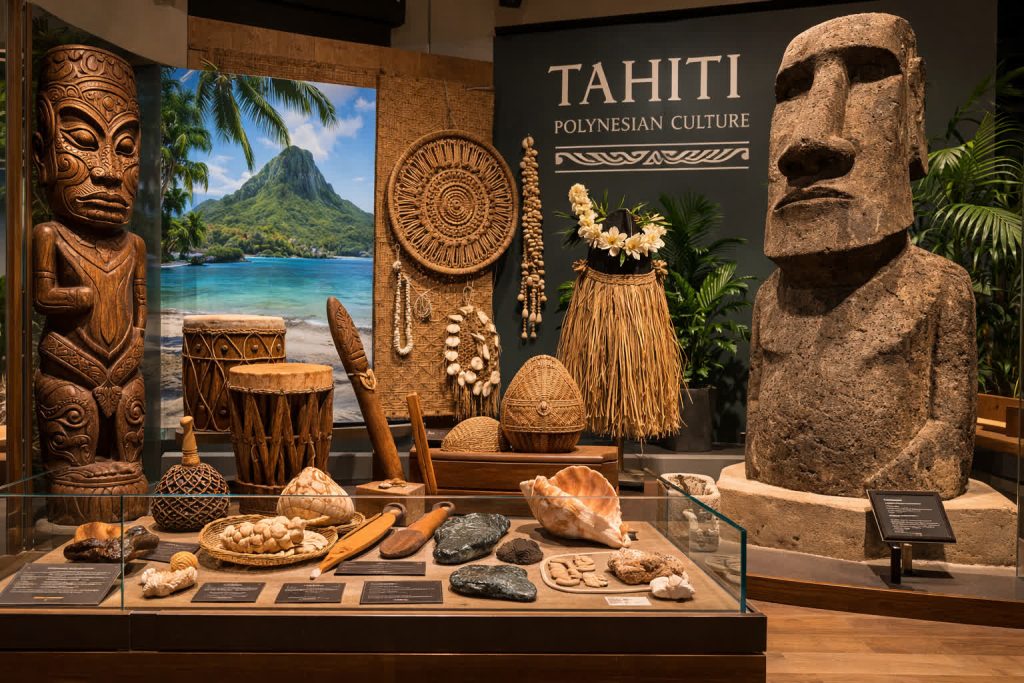
Tahiti, the largest island of French Polynesia, has a rich history shaped by its indigenous culture, European contact, and colonial influences. Before European arrival, Tahiti was inhabited by Polynesians for over a thousand years. They developed a complex society organized into chiefdoms, with distinct social hierarchies, religious practices, and oral traditions that celebrated their connection to the land and sea.
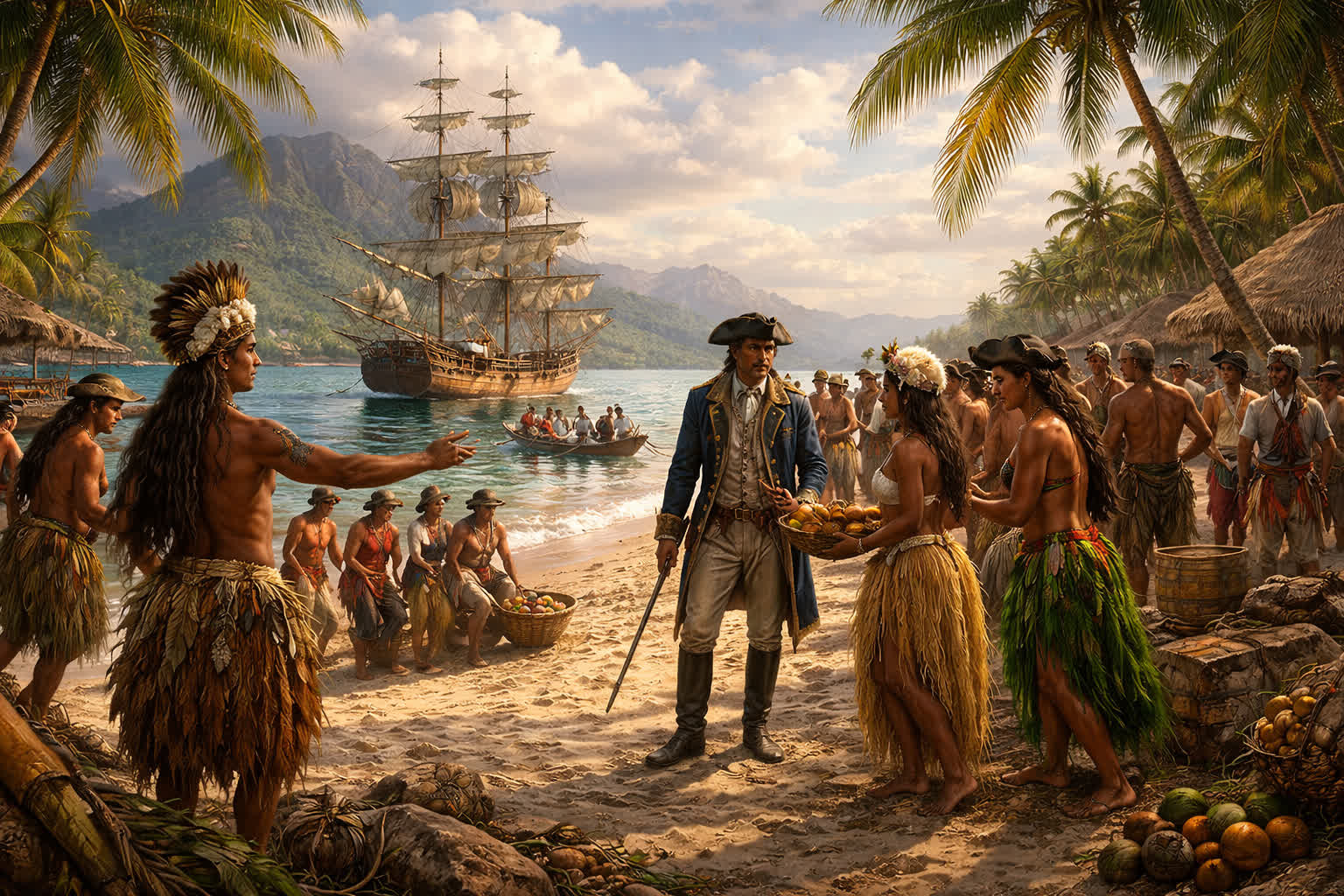
European contact began in 1767 when British explorer Samuel Wallis arrived, followed by French navigator Louis-Antoine de Bougainville in 1768 and British naturalist James Cook shortly thereafter. These encounters introduced Tahiti to European trade, Christianity, and global politics, setting the stage for profound changes in Tahitian society.
The Pomaré dynasty emerged as the ruling family of Tahiti in the late 18th century. Pomaré I united several chiefdoms under his leadership, and his successors, including Pomaré II and Pomaré III, navigated the delicate balance between maintaining traditional authority and adapting to the growing influence of European powers. Pomaré II, in particular, converted to Christianity in 1819, establishing a framework for the spread of the religion across the island.
In 1842, France formally established a protectorate over Tahiti, consolidating its colonial presence in the Pacific. The Pomaré monarchy continued as a symbolic authority until 1880, when Tahiti was fully annexed into the French colonial empire. During this period, Tahitians faced significant social and cultural changes, including the imposition of French law, introduction of European education systems, and shifts in land ownership.
Despite colonization, Tahitian culture endured. Traditional dance, music, tattooing, and storytelling persisted, blending with European influences to create the vibrant cultural tapestry that Tahiti is known for today. The legacy of the Pomaré dynasty remains central to Tahitian identity, symbolizing both the resilience of its people and the complex history of the island’s encounter with the wider world.