
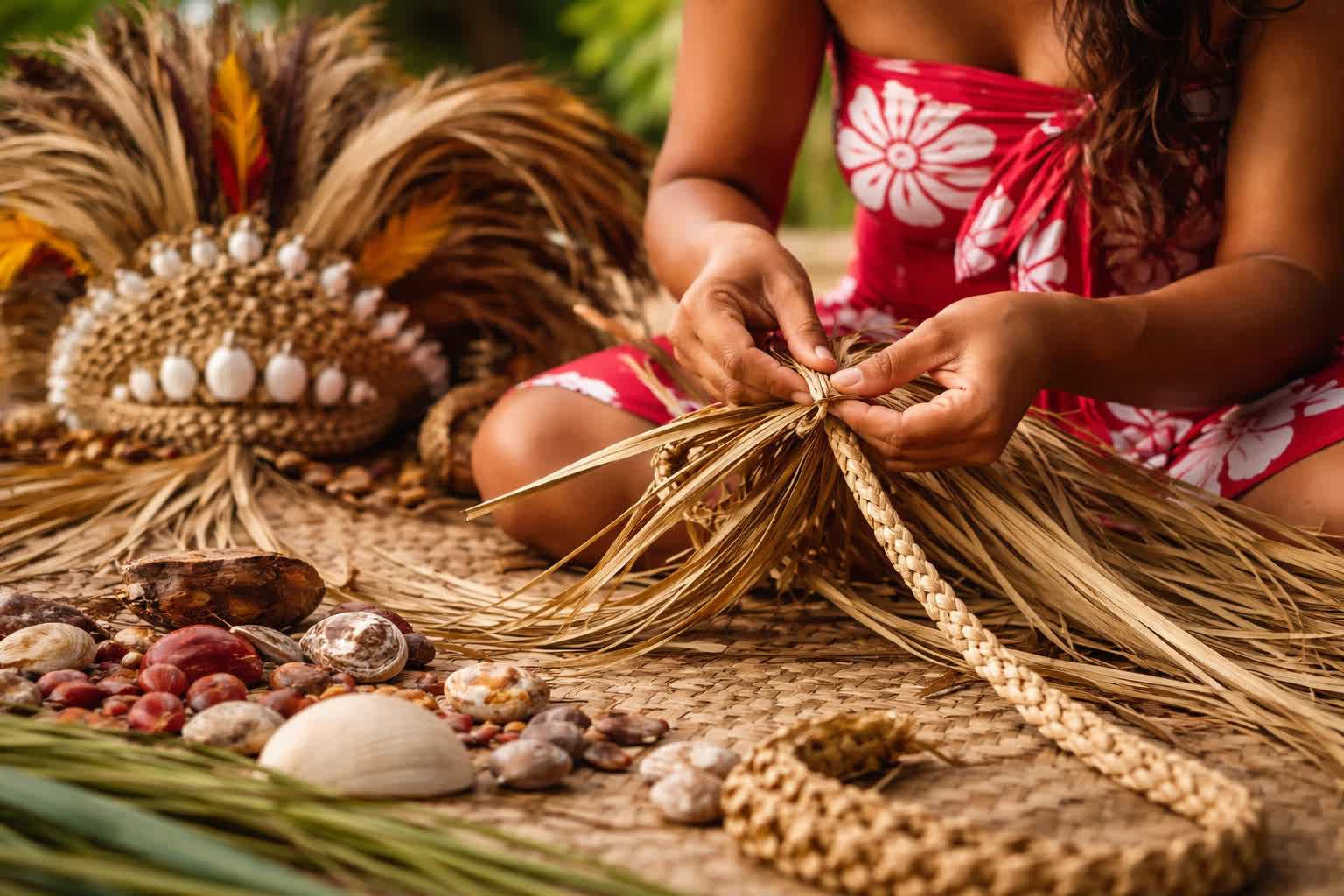
At the Ori Tahiti Conservatory, handicrafts are more than decorative elements, they are a living extension of Polynesian identity, craftsmanship, and ancestral knowledge.
Cultural Significance
Every handcrafted piece carries intention and meaning. Created using natural materials such as leaves, fibers, shells, and wood, these items reflect a deep respect for nature and tradition. Handicrafts are not only visual elements but also symbolic objects that connect the dancer to the land, the ocean, and the spiritual world of Tahiti.
Types of Traditional Handicrafts
Headdresses (Mahuta and variations): Carefully assembled with feathers, fibers, and natural ornaments, they represent status, character, and the essence of each performance.
Necklaces and belts: Made from shells, seeds, and plant fibers, these pieces enhance movement and rhythm while adding layers of cultural meaning.
Handcrafted instruments and props: Traditional items used during performances, reinforcing the connection between music, movement, and storytelling.
Woven elements: Intricate braiding and weaving techniques used in accessories and costume details, showcasing skill passed down through generations.
Preserving the Legacy
Handicrafts play a vital role in preserving Polynesian heritage. Each piece is handmade with knowledge that has been transmitted over centuries, ensuring authenticity and cultural continuity. Beyond their beauty, these creations embody the spirit of Ori Tahiti, transforming every performance into a powerful expression of tradition and identity.