
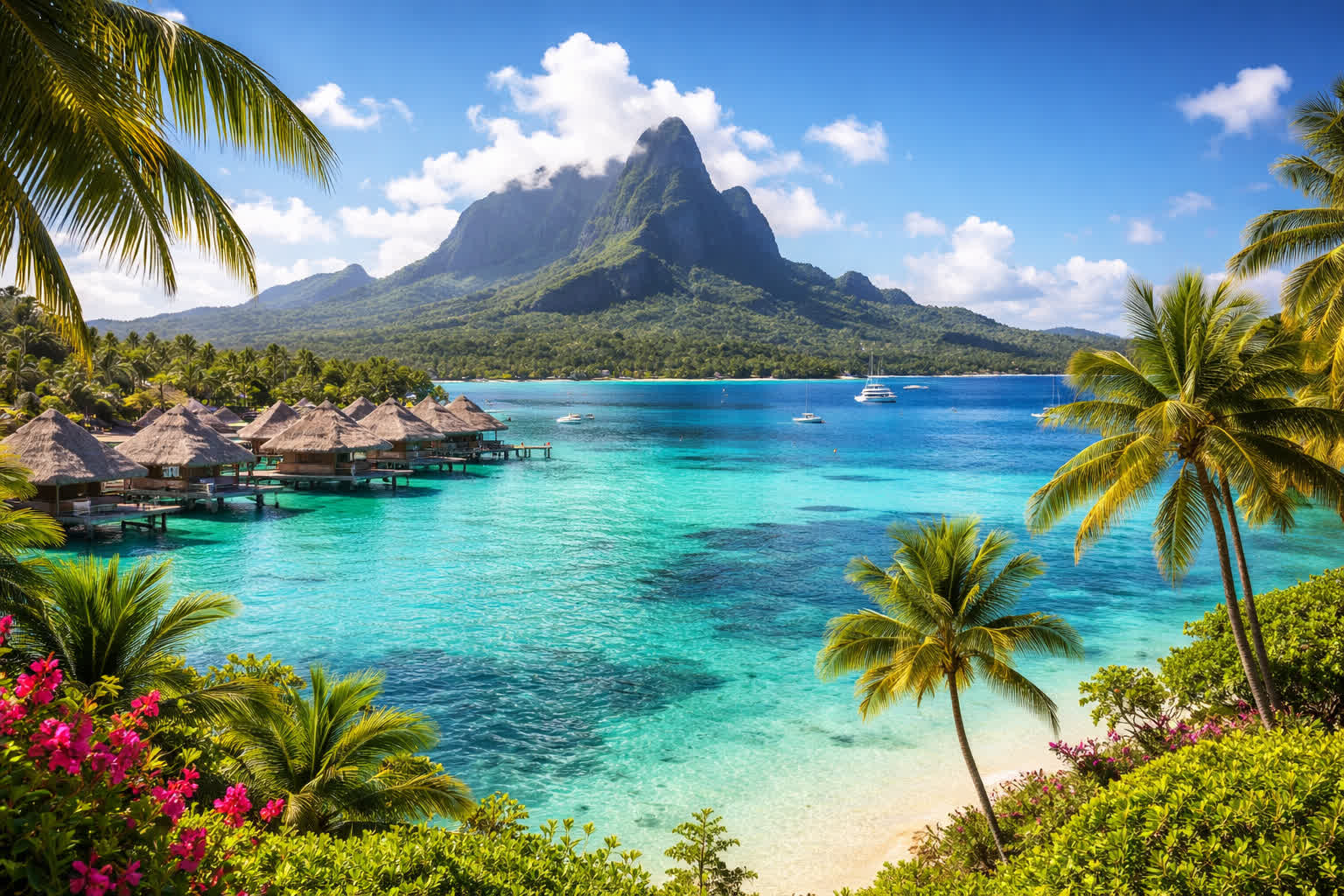
Tahiti is the largest and most influential island of French Polynesia, located in the central South Pacific Ocean. As the cultural, economic, and political heart of the territory, it serves as a gateway to one of the most geographically dispersed regions on Earth. Understanding Tahiti requires looking beyond the island itself and into the broader structure of French Polynesia—its population, geography, economy, and cultural composition.
Geographic Overview
Tahiti belongs to the Society Islands, specifically the Windward group, and is composed of two connected land masses: Tahiti Nui (the larger western section) and Tahiti Iti (the smaller southeastern peninsula). The island covers approximately 1,044 km² and is characterized by volcanic mountains, lush valleys, and a surrounding coral reef lagoon.
The capital city, Papeete, is the administrative and economic center of French Polynesia, functioning as the main port and international gateway for the region.
French Polynesia: Structure and Islands
French Polynesia is an overseas collectivity of France composed of 118 islands and atolls, spread across more than 2,000 km of ocean.
These islands are organized into five main archipelagos:
-
Society Islands (including Tahiti and Bora Bora)
-
Tuamotu Archipelago (a chain of ~76 coral atolls)
-
Marquesas Islands (remote volcanic islands to the north)
-
Austral Islands (south of Tahiti)
-
Gambier Islands (far eastern group)
This distribution creates a unique geopolitical structure where communities are highly dispersed, often separated by vast ocean distances.
Population and Demographics
Tahiti itself has a population of approximately 191,779 inhabitants, representing the majority of the territory’s population.
French Polynesia as a whole has a population ranging between 280,000 and 300,000 people, depending on the estimate and year.
The demographic composition is diverse:
-
Polynesian: ~78%
-
Chinese descent: ~12%
-
European (local and metropolitan French): ~10%
Languages reflect this diversity, with French as the official language, alongside Tahitian and several regional Polynesian languages.
Economy and Infrastructure
The economy of French Polynesia is heavily service-based, with tourism playing a central role. Services account for over 80% of economic activity, supported by government administration, hospitality, and transport sectors.
Key economic elements include:
-
International tourism (luxury travel, overwater resorts)
-
Pearl farming (especially in the Tuamotu Islands)
-
Fishing and limited agriculture
-
Financial support and subsidies from France
GDP per capita is relatively high compared to many Pacific island nations, exceeding $20,000 USD, although economic inequality and cost of living remain significant challenges.
Climate and Environment
Tahiti and its surrounding islands have a tropical climate, moderated by trade winds. There are two primary seasons:
-
Warm and humid season (November to April)
-
Cooler and drier season (May to October)
The region is known for its biodiversity, volcanic landscapes, coral reefs, and lagoons, making it one of the most ecologically distinctive areas in the Pacific.
Cultural Significance
Tahiti is the cultural epicenter of Polynesian identity, particularly in dance, music, and oral traditions. It plays a crucial role in preserving and transmitting practices such as Ori Tahiti, which remains deeply connected to ancestral heritage, social structure, and ceremonial expression.
The blending of indigenous Polynesian traditions with French administrative influence creates a unique cultural dynamic that defines modern Tahitian society.
Strategic and Global Context
Despite its remote location, Tahiti holds strategic importance:
-
It serves as France’s primary presence in the South Pacific
-
It connects Oceania to Europe through political and economic ties
-
It acts as a regional hub for transportation, governance, and tourism
Its geographic isolation contrasts with its global cultural visibility, especially in travel, anthropology, and performance arts.
Conclusion
Tahiti is far more than a tropical destination—it is the central node of a vast oceanic territory, combining complex geography, cultural depth, and economic dependency within a unique political framework. As the heart of French Polynesia, it represents both continuity and transformation: a place where ancestral Polynesian identity coexists with modern global systems.