
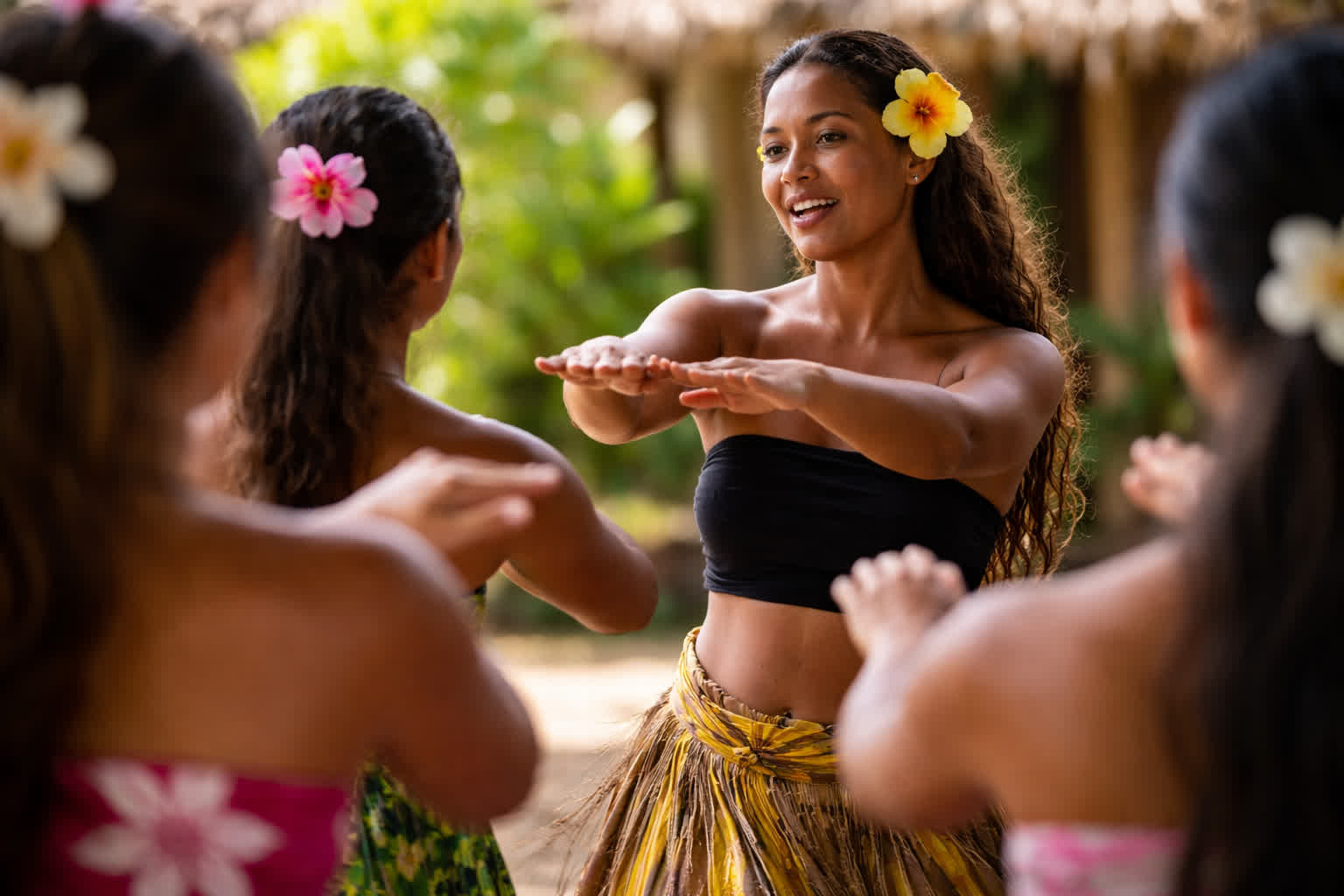
At the Ori Tahiti Conservatory, cultural vocabulary is more than a collection of words, it is the foundation that connects movement, music, and meaning within Polynesian dance.
Cultural Significance
Every term used in Ori Tahiti carries depth and intention. The language reflects the worldview of the Polynesian people, where dance is not separated from daily life, nature, or spirituality. Understanding this vocabulary allows dancers and enthusiasts to engage more deeply with the culture, transforming performance into authentic expression.
Key Elements of Cultural Vocabulary
Basic dance terms: Words used to describe fundamental movements, rhythms, and techniques that form the structure of Ori Tahiti.
Body and movement language: Specific terms that define how the hips, hands, and posture should move, each with precision and purpose.
Musical references: Vocabulary related to traditional rhythms and instruments, guiding dancers in timing and interpretation.
Cultural expressions: Words and phrases tied to stories, emotions, and traditions, giving meaning to each choreography.
Preserving the Legacy
Learning and preserving cultural vocabulary is essential to maintaining the integrity of Ori Tahiti. These words carry generations of knowledge, ensuring that the dance remains connected to its origins. By understanding the language behind the movement, each performance becomes more than choreography, it becomes a true representation of Polynesian identity and heritage.